Diaries of a Deer Hunter - Chapter 4
Diaries of a Deer Hunter... I Finally Have a Plan
Chapter 4
Up until this year, I really had no plan at all. I was basically just winging it,
pretending I knew what I was doing. But this was going to be the year that changed.
Shortly after shooting the doe, I put the cameras back up to see what bucks had
survived on this little eighty-acre piece of land. I left the cameras up for a couple of
months, and the results gave me absolutely no clue what to expect. Bucks I had never
seen before were suddenly showing up, and the ones that used to be on camera every
day were nowhere to be found. And definitely not the old Roman-nosed bruiser I’d
gotten that one fleeting picture of the year before.
By the end of summer, it was time to get to work. On the first of September, I
started putting out corn and running the cameras again to get new pictures. I monitored
them constantly, looking for any changes in patterns. When the season opened, I didn’t
do my first sit until mid-October. I had two bucks showing up consistently, a big thirteen-
point and a giant eight, both coming out around eight in the morning every day. That
year, I had started a new job, so all-day weekday sits weren’t possible. I was a weekend
warrior like most people. I kept the same blind setup as the year before, and the deer
were still traveling the route I expected.
On November 8, I went out for an afternoon sit. I was set up on the south end,
and as the sun dipped lower, I saw movement. A buck stepped into an opening, and I
immediately realized he was a good one. He disappeared back into the cedars, but I
knew he was on a path north that would take him right by me. That familiar feeling
started in my chest again, the one that lets you know it’s about to be game time. When
he finally came by, he wasn’t in the draw at all. He was about thirty yards out in the cut
cornfield. He was massive and gray-faced, but he was only a six-point. Those six points
looked like they were three feet long. I slowly raised the crossbow, sighted in on my
third pin, put it behind his shoulder, and let it fly. To this day, I couldn’t tell you where that
bolt went. It definitely didn’t hit him, because he took a few steps away, stared straight
at the tree I was sitting under, and then walked about two hundred yards north and
picked a fight with a smaller buck. After dark, I searched for the bolt, and the best I can
figure is that it glanced off something and ended up way out in the cornfield. That was
the first time Buck Fever ever got the best of me.
The next Saturday was the first time I could get back out. I went in well before
daylight, got set up, and it was magic. I saw six bucks that day. None came into
shooting range, and most were too young anyway, but I learned something important:
the traffic pattern had changed. Every deer came from the south but didn’t follow the
draw. They worked their way north through the cornfield and then cut across the far
north end. Around 10:30, I saw him. A ten-point, following the same path as the others
had taken all morning. I decided to go for the Hail Mary. I slipped out the back of my
blind and headed north on the opposite side of the cedar row as the buck. I knew I could
beat him there if he stayed on the same line. With my heart pounding out of my chest, I
got to the end of the row. The problem was, he didn’t follow the same path. He cut into
the cedars about twenty feet behind me. When I turned around, we were suddenly face
to face.
It was a standoff. He stood there, nose pointed straight at me, and I stood there
with the crossbow raised. I knew better than to take a frontal shot, so I waited. Slowly,
unbelievably, the buck turned and gave me the best twenty-foot broadside shot
imaginable. A crossbow sighted in with a twenty-yard minimum, and a deer standing at
seven yards exactly ideal, but it didn’t matter. I put the top pin behind his shoulder and
let it go. Nobody had ever told me the sound a bolt makes when it actually hits an
animal, but that sound is something I’ll never forget. The buck kicked, sprinted to the
neighbor’s property line, stood still for about twenty seconds, and hopped the fence. My
stomach dropped. This was worst-case scenario, or so I thought.
I could still see him about sixty yards away, standing next to another cedar row. I
stood as still as possible and then slowly backed out. I walked to my truck and called my
buddy Jake, who lived only about three miles down the dirt road. He said he’d bring his
Polaris if I could find an access point. I went to talk to the adjacent landowner, who
pointed me to the most beautiful lease road imaginable, leading straight back to the
cedar thicket. By the time Jake arrived, almost an hour and a half had passed. We
eased down the road, found the blood trail, and followed it only about fifteen feet into
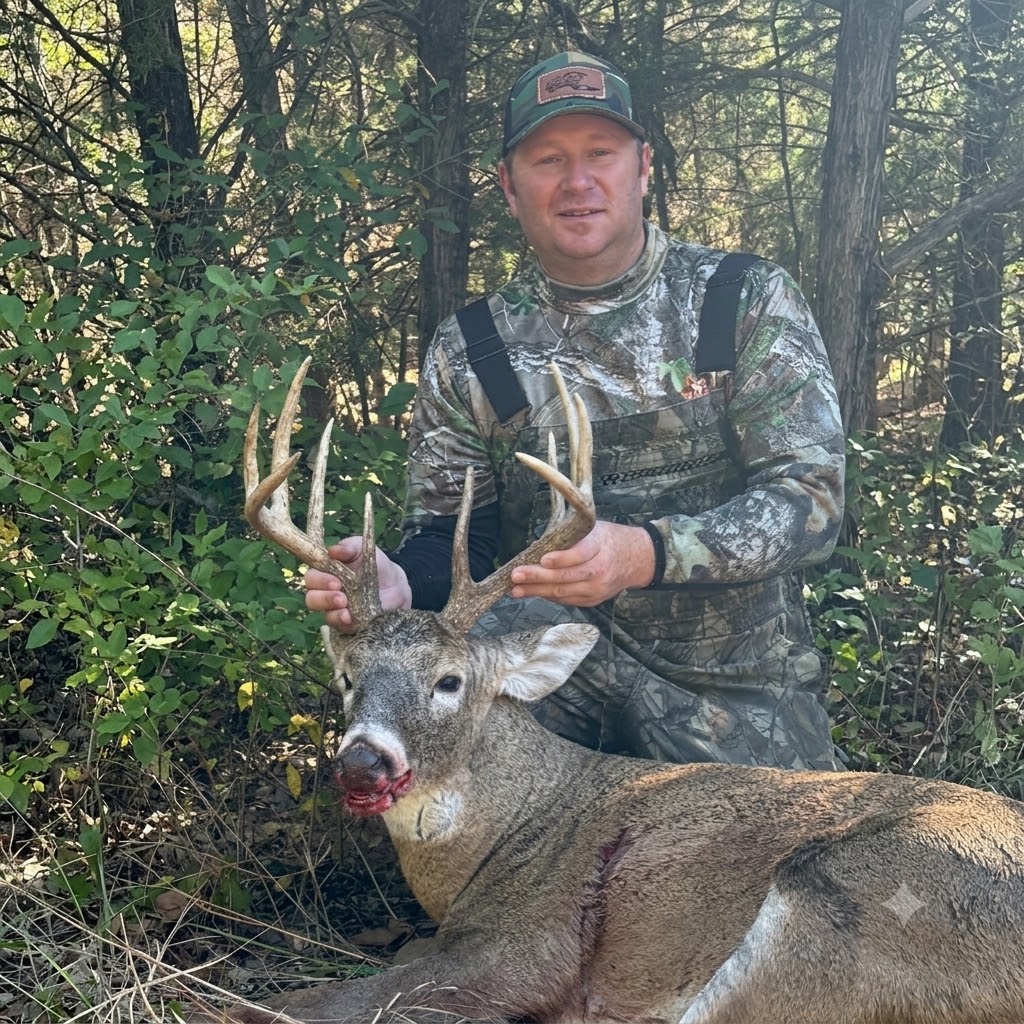
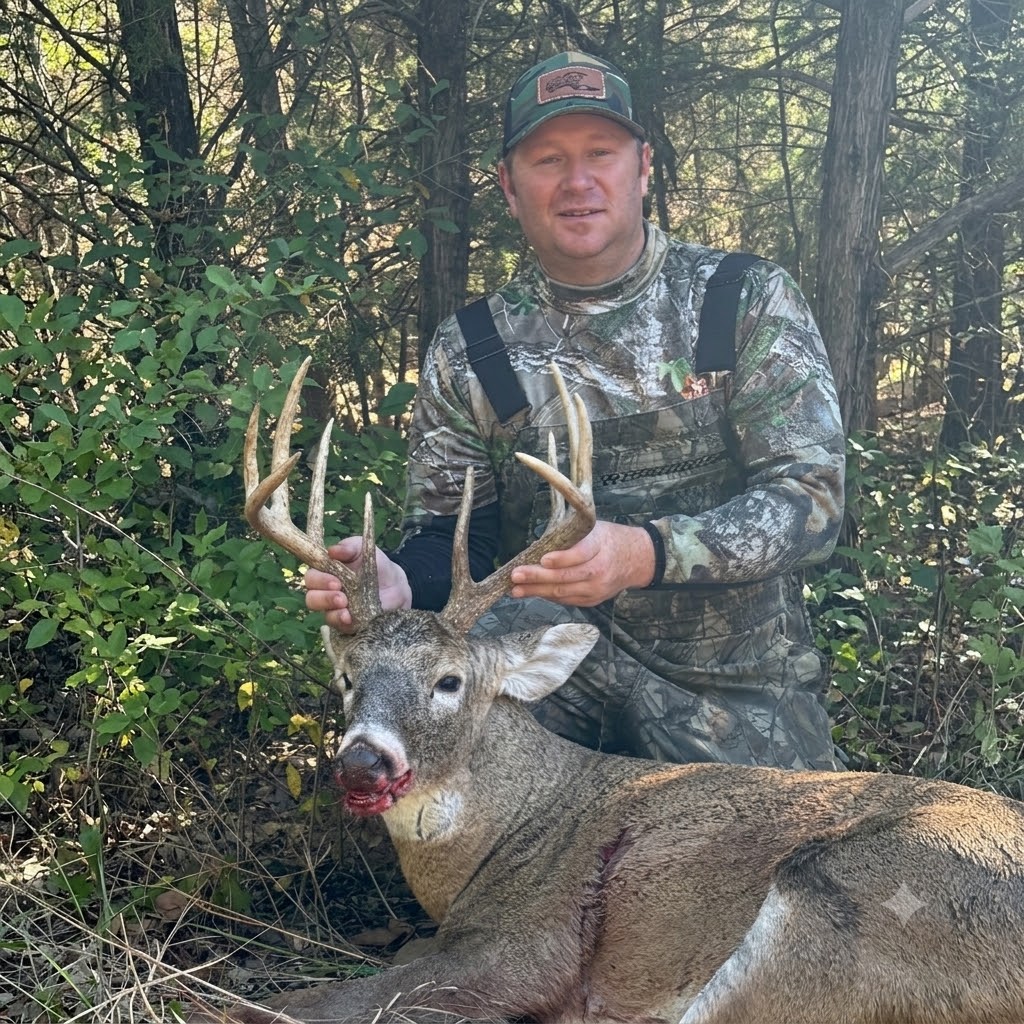
the cedars. There lay my first buck. We loaded him directly into the Polaris and drove
out without dragging him an inch.
The buck is the picture you see in my bio. He’s not a trophy buck by any official
standard, but he’s mine, and that makes him a world record in my book. I had planned
this spot for two years and sat in that blind every single time, but I learned something
important about deer hunting: sometimes you have to improvise. You can prepare all
you want, but when you’re on their turf, the deer make the rules. And that’s the story of
my first buck, from a guy who has no idea what he’s doing, is too cheap to buy
expensive equipment, and is basically just like ninety percent of you people reading this.